How to Do Long Division (Step-by-Step Guide for Beginners)
Long division is easier to understand when each part of the work is visible. This guide explains the long division method in a clear sequence so beginners can learn how numbers are divided step by step. If you have ever asked how to do long division without guessing, the key is to slow the problem down and follow the same repeatable pattern every time.
What is Long Division?
Long division is a method used to divide large numbers into smaller, manageable steps. It helps you understand how numbers are divided instead of using only a calculator. In a long division problem, the dividend is split from left to right, the divisor is tested against the current number, and each quotient digit is written in the correct place. This written layout is why students can see how division connects to multiplication, subtraction, place value, and remainders.
This page explains:
how can i do long division
how do i do long division
how do we do long division
Long Division Step-by-Step Method
To understand how to do long division, follow these steps:
Step 1: Divide
Find how many times the divisor fits into the first part of the number. Start from the left side of the dividend and use enough digits for the divisor to fit at least once. This first choice decides the next quotient digit. When learners ask how can i do long division correctly, this is usually the step where they need to compare the divisor with the current part of the dividend before writing above the bracket.
Step 2: Multiply
Multiply the quotient digit by the divisor. Write this product below the part of the dividend you just used so you can check the division choice. Multiplication proves that the quotient digit was not a guess. If the product is larger than the current number, the quotient digit is too high; if the difference after subtraction is still larger than the divisor, the quotient digit may be too low.
Step 3: Subtract
Subtract the product from the current number. The result shows what is left before you continue to the next digit. This temporary remainder should be smaller than the divisor before you bring down another digit. Careful subtraction keeps the long division method accurate in longer problems.
Step 4: Bring Down
Bring down the next digit and repeat the process. Long division continues with divide, multiply, subtract, and bring down until no digits remain. This repeat cycle is the answer to how to do long division in most classroom examples. You do not need a new rule for every digit; you use the same rule again with the new working number.
This is the core long division method used in all problems. The same pattern repeats until the full dividend has been processed. When you practice, say the pattern out loud: divide, multiply, subtract, bring down. That routine helps beginners remember how to do long division and helps advanced students check where a mistake happened.
Long Division with Different Types of Numbers
Long division can be used in different cases:
With 2 digits
Example: 144 ÷ 12. Two-digit divisors are easier when you estimate first, then use multiplication to check the quotient digit. If you wonder how do i do long division when the divisor has two digits, round the divisor mentally, try a reasonable quotient digit, multiply, and adjust if the product is too large.
With 3 digits
Example: 1,452 ÷ 12. Larger dividends use the same long division method, but you repeat the cycle across more digits. The layout may look longer, but the logic does not change. Each new digit simply creates another chance to divide, multiply, subtract, and bring down.
With decimals
Decimals are used when division does not end evenly. You can add a decimal point and continue bringing down zeros to find a more precise answer. This is still long division, but the quotient continues past the decimal point instead of stopping with a whole-number remainder.
With fractions
Long division can also support fraction division problems when you convert or compare values carefully before solving. For many students, it is easier to understand fraction answers after they first understand how long division creates quotients and remainders from whole numbers.
These variations match:
how to do long division with 2 digits
how to do long division with 3 digits
how to do long division with decimals
how to do long division with fractions
Long Division Example
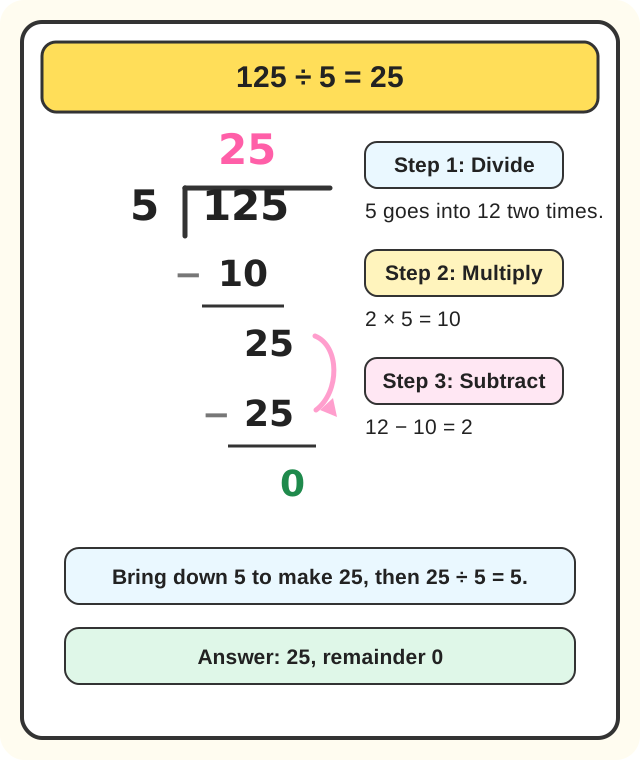
Example: 125 ÷ 5
5 goes into 12 -> 2
2 x 5 = 10
12 - 10 = 2
Bring down 5 -> 25
5 goes into 25 -> 5
Answer: 25
The answer is 25 because 5 fits into 125 exactly, and there is no remainder after the final subtraction. This simple example shows the full long division method without extra complexity: choose a quotient digit, multiply by the divisor, subtract, bring down the next digit, and repeat. If someone asks how can i do long division on paper, this example is a good starting point because every number stays easy to check.
Is There a Faster Way to Do Long Division?
Yes, there are shortcuts and estimation tricks that can help you divide faster. However, the step-by-step method is important for learning and understanding math correctly. Before trying shortcuts, make sure you can explain how to do long division from the setup to the final remainder.
Once the full method feels natural, estimation can help you choose quotient digits faster while still checking your work with multiplication and subtraction. Even then, long division depends on checking the product and subtraction line before moving on.
Long Division Tips (Easy Learning)
To make long division easier:
Start with simpler numbers
Practice step by step slowly
Learn multiplication tables well
Do not skip subtraction steps
This helps with easy long division for beginners.
Why Learn Long Division?
Learning long division helps you:
Understand math deeply
Improve problem-solving skills
Prepare for exams
Check calculator results
Related Long Division Pages
Continue with a calculator or a remainder-focused explanation when you want to check your own division problems.
You divide, multiply, subtract, and bring down digits step by step until the problem is solved. Each cycle creates one part of the quotient. If your question is how can i do long division without losing track, write every product and subtraction line clearly, then check each temporary remainder before you bring down the next digit.
How do I do long division?
Follow the long division method: divide the current number, multiply by the divisor, subtract the product, bring down the next digit, and repeat. The practical answer to how do i do long division is to keep the same order for every digit instead of switching strategies in the middle of the problem.
How do we do long division?
Teachers often explain long division with step-by-step examples, because the written method helps you see place value, products, subtraction, and remainders clearly. In class, students usually ask how do we do long division when they are unsure where to write the quotient digit, so the bracket layout and column alignment matter.
How do you long divide?
To long divide, set up the divisor outside the division bracket and the dividend inside it, then solve with repeated divide, multiply, subtract, and bring-down steps. This is another way to ask how to do long division, and the answer is the same whether the numbers are small, large, or continued into decimals.
What is the long division method?
The long division method is a step-by-step process used to divide large numbers manually. It breaks a division problem into smaller repeated calculations. Because each calculation is visible, long division helps you understand why the quotient is correct instead of only trusting a final answer.
Is there a faster way to do long division?
Yes, estimation techniques can make long division faster, but learning the full method first is important for accuracy and for understanding why the answer works. After you know how to do long division step by step, you can estimate quotient digits more confidently and still verify each step with multiplication.